
Growing up watching detective serials and movies, everyone wants to become a detective. After knowing the character of Sherlock Holmes, we assume to be like him. However, somewhere along the way, we forget this dream of ours and work towards more “realistic” goals. Crime rate continue to increase that is why the need for detectives to solve them rises. Thus, some police officers step up and exhibiting what Sherlock Holmes does. You will find some information about being a detective if you still want to become one.
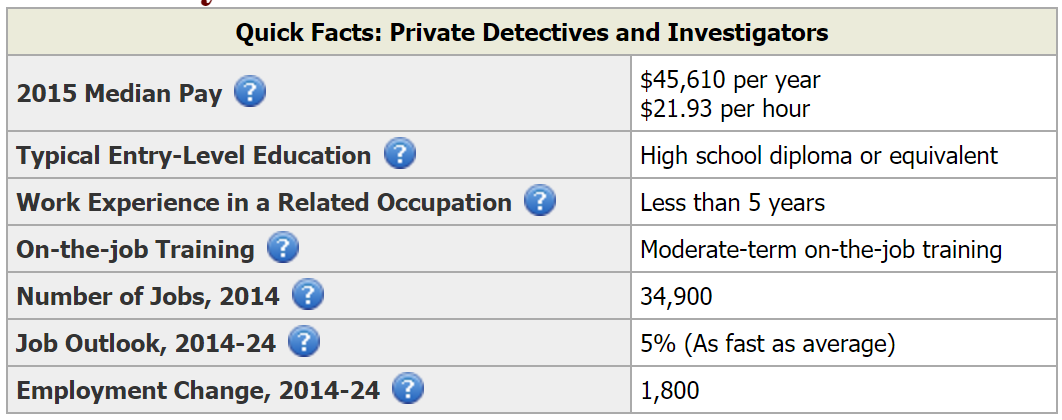

Table Of Contents
- Average Detective Salary
- Detective Career Outlook
- How To Become A Detective
- Detective Job Description
How Much Does A Detective Make
The basis of a detective’s salary at first will depend on his or her employer. Usually, a state employed investigator has higher earnings compared to a private one. This is because a private detective has intermittent work while the state employed has a steady work. A state employed detective earns a national average of $76,000. The average salary for a private detective is around $45,000 only. Later, you will know about what affects a PI’s salary. Let’s take a look at the factors affecting a state employed investigators’ salary at the moment.
[asd_program_button /]Size of population
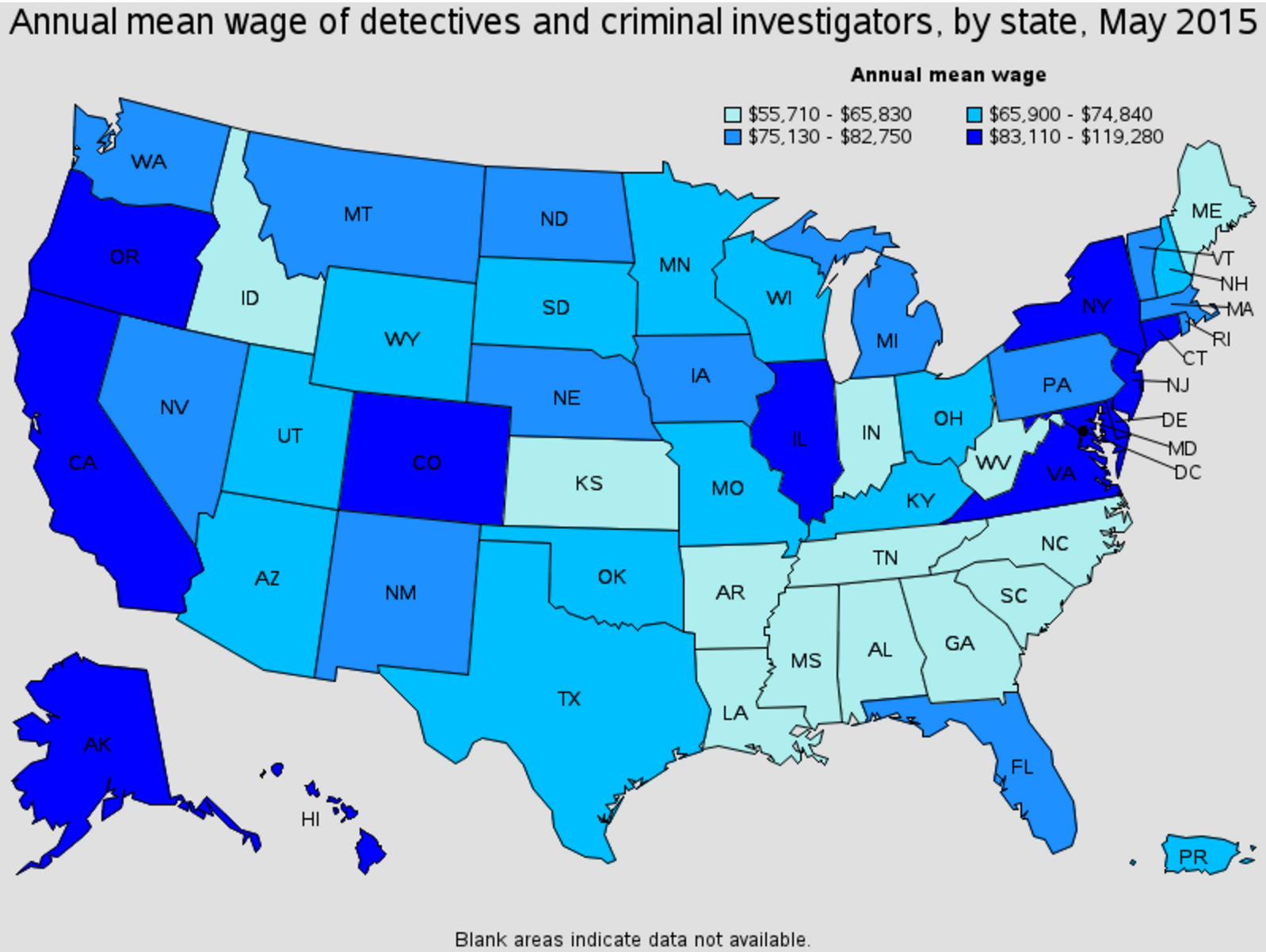
Like police officers, the population of a city decides the income of a detective. A more populated city will mean more cases to be handled. Therefore, the salary increases as well. Similarly, crime rate also plays a major factor in deciding the salary of an investigator. For example, the average salary for someone who is in the LA police department will range from $44,000 to $88,000. Whereas, a member of the Miami Police department usually get $86,000 to $107,000 salary.
Place assigned or working
Crime rate and population of the place are closely related to the location. However, another factor comes into play in such conditions – cost of living. Higher the cost of living in a certain location, higher the detective is paid. This logic agrees with the case of private investigators too. A pay of $116,00 is usually received by employees in District of Columbia, Alaska and New Jersey.
Level of education attained
For any police job (except at the federal level), a high school degree is sufficient. This rules do not apply in all states but higher education certificates are not required in most states. However, some states and departments have started to realize the importance of higher education and thus are paying officers and detectives a percentage higher above the base pay if they have a degree after high school. This may be an associate’s, bachelor’s or even a master’s degree. Your degree will affect your salary.
Number of years in the field
Like any other job, you will get earn as an investigator if you stay in the field long enough. Usually, people see an increase of up to $15,000 with 20 years of experience if they do not get promoted. You can earn about $180,000 annually if you reach the post of Police Chief as a promotion.
Latonia Private Investigators
The salary of a private investigator depends on the how many cases he or she takes and solves them. As mentioned before, the location can affect the price along with the many other factors such as the amount of discretion needed, the amount of danger involved, extra equipment required and many other things. Clients usually present their problem to the investigator and then it is up to them to quote a price for the job.
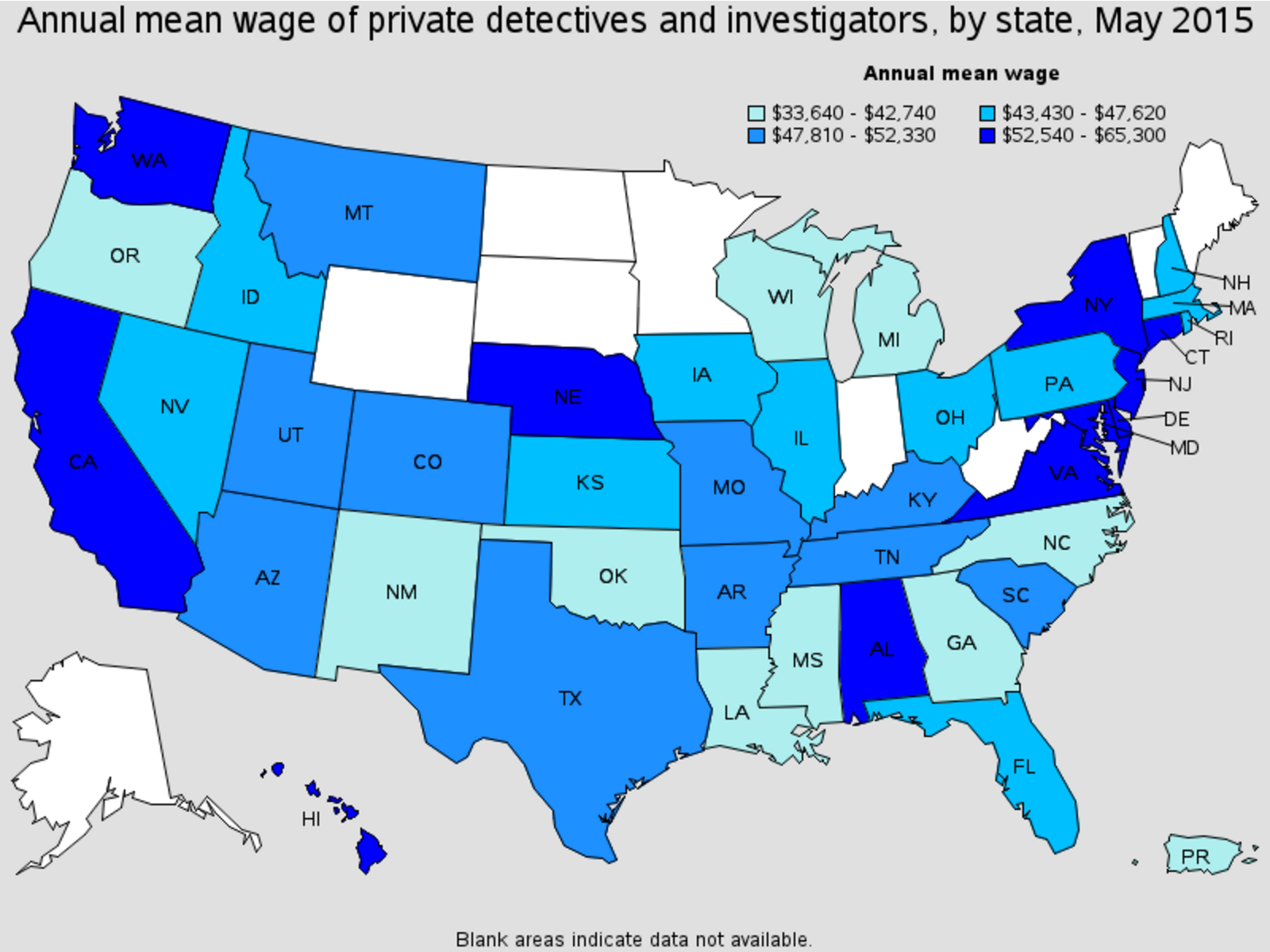
A state-employed detective has a steady income that will increase by various means as described here. On the other hand, a private investigator’s salary is quite unpredictable and will only increase if he or she is already popular or known. The path to choose will be determined based in the financial facts you have.
Latonia Detective Career Outlook
What we are going to talk about first is the growth in the fields. There were about 106,000 public detectives or criminal investigators recorded in 2015. There were about 30,000 private investigators who do the same job on record. There is a predicted growth of 5% in the industry of private detectives. Meaning to say, in 2025 the new jobs open will reach 1,500. This growth rate is following the average growth rate of 5% across all other sectors. On the other hand, for public investigators, this figure is at 4%. This goes to show that 4,000 more jobs as a criminal investigator is expected in 2025. This too is an average rate of growth.
[asd_program_button /]The increasing population is the reason behind this steady increase in employment. Because of the increase in population, more people need to be protected and more criminals need to be caught. But due to the strict implementation of laws and technology are more advanced, the crime rate is not increasing that much. Because of this, both the phenomena are just the same leading to average growth in each career.
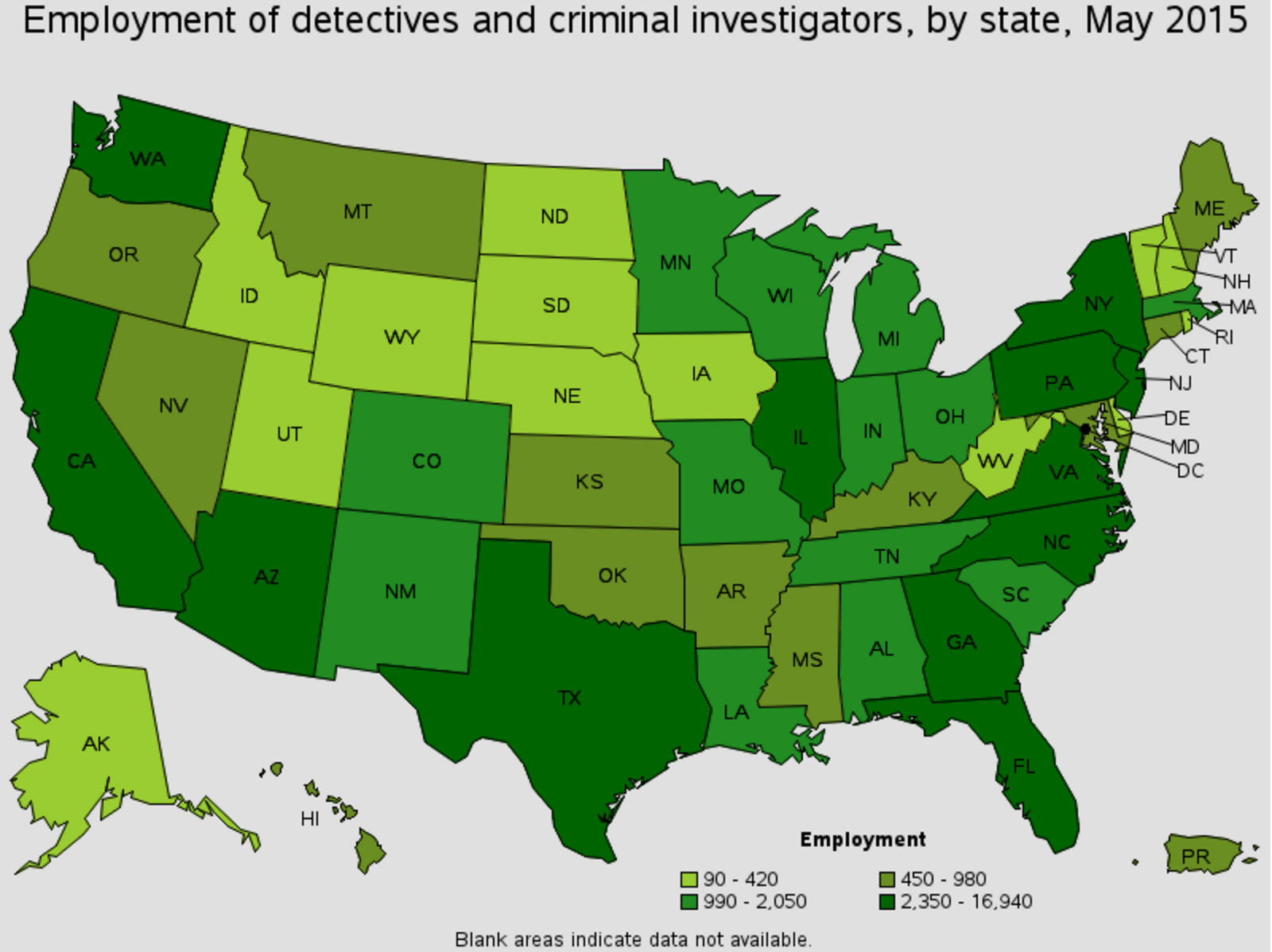
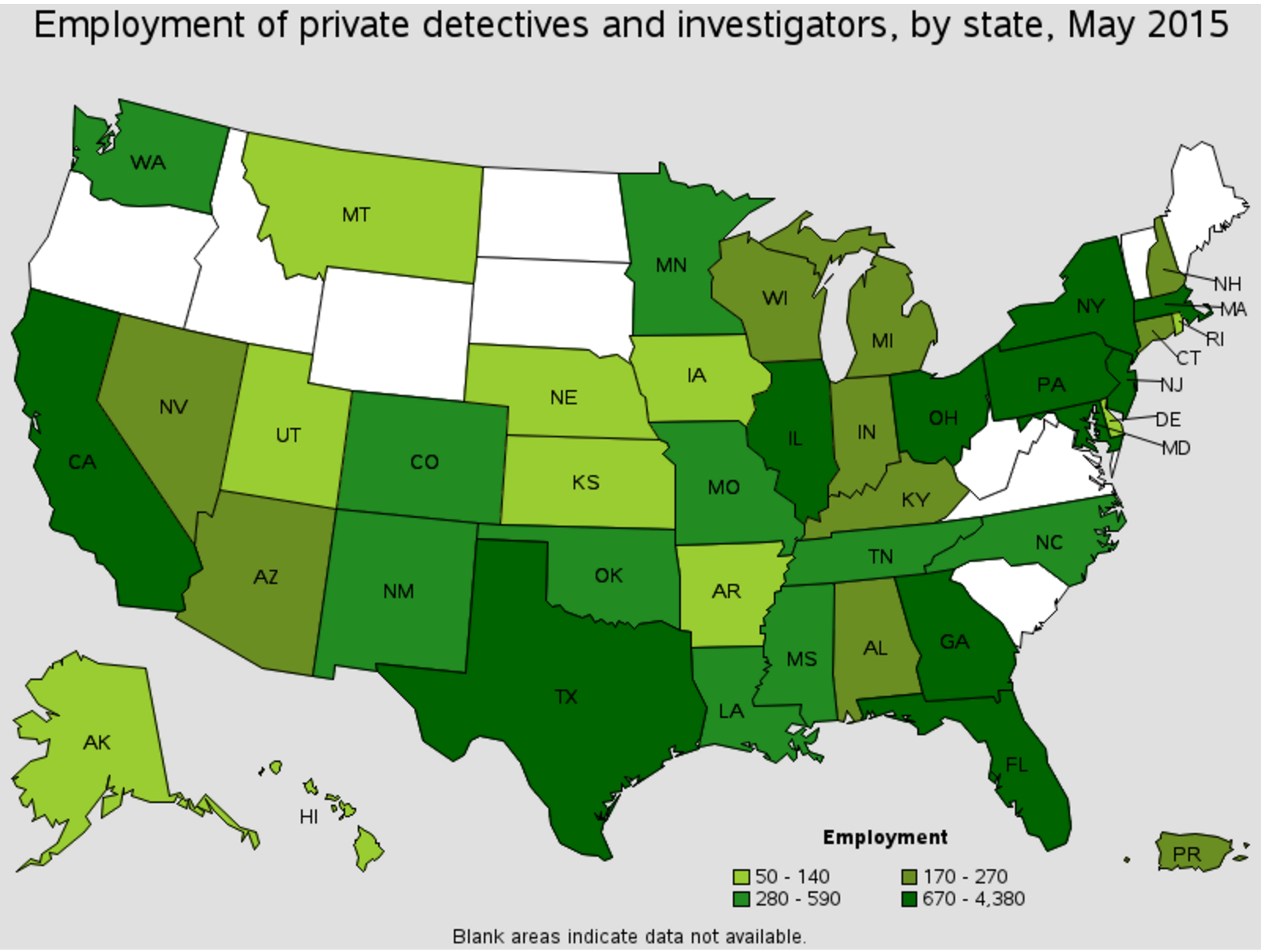
The highest number of Criminal/Law Enforcement Investigators are found in Texas, California and New York. The employment in western states and Texas are higher that to that of the eastern parts. Private detectives in California, Texas and Florida with the southern part are higher in number compared to the northern ones.
Let’s move on to the industries that hire most of these two professionals. The Local, State government and the Federal branch are employing a lot of criminal investigators. Security Services, Consulting services are the ones who usually hire private detectives and the local government need them for consultation on a few cases.
When it comes to finance, criminal investigators are paid more compared to the private ones. Their annual average salary is $80,000 (Criminal investigators) and that of Private investigators is around $52,000. When you combine the aspects of geography and finance, you see that District of Columbia, Alaska, and New Jersey paid the most (6 figure salaries) for Public investigators. Private detectives receive higher payment in Alabama, Nebraska, and New Jersey.
Comparing with different industries again, we see that for private industries, the most employing industries do not pay the highest. Private detectives are paid most in Electromedical, Navigational, Power generation, Metal Product forming and other such industries because of the most sensitive information that needs to be protected. Federal agencies, postal services, and educational institutes are paying public investigators most.
How can You Qualify as a Detective In Latonia
Detectives come in two kinds. There are private investigators that the general public can hire to investigate on certain things. The others are employed by the government and reach this post after being promoted from a police officer. We will explore both avenues here.
[asd_program_button /]Complete High School
A detective is known for his deduction skills, and it is due to such that he is promoted to such position. This only means that you will need to complete your high school studies and become a police officer before you can become a detective. A high school degree is likewise necessary if you want to be a private investigator.
Get your Bachelor’s Degree
A bachelor’s degree isn’t really necessary in most cases when becoming a police officer. Although some officers would like to have other means of employment right after retirement. Likewise, you will need a bachelor degree if you want to become a detective.
Many institutions require applicants to have a bachelor’s degree in law, criminal justice or psychology to become a detective. Anyone with an associate’s degree is given training up to 5000 hours. On the other hand, someone with a bachelor’s degree needs only 4000 hours of training.
Get enough experience
Professional experience as an investigator is required in order to become a professional detective. There are many ways to get this. However, the most common way is to be employed by the government first. Landing work as a law enforcement investigator, arson investigator, or criminal investigator will count as being a person with experience. Working as an office investigator or as a licensed repossessor will count as well.
There might be variations in the required experience in the state you’re applying in. A state might require at least 3 years of experience, but in some it could be as long as 5 years.
Get firearms permits
Investigators who don’t have a firearms permit are prohibited from carrying their guns. Some firearms will need you to undertake a full training course in order to get your permit. Hence, to get a permit for your firearm when working as an investigator, you will need to complete the full training course.
Undergo a Kentucky licensing test
A licensure test is required after you have all the requirements needed. During the exam, you will need to answer questions in multiple choice, usually regarding about state laws and several other procedures. Those who are looking to be a private detective will need to take this test. After passing this test, you are officially a private investigator with a license.
File for Kentucky insurance
Due to the dangerous nature of the work, you should make sure to get an insurance. Basically, this is a medical insurance worth $10,000. However, it is important to also get a higher amount if you carry a firearm since you need to protect yourself from greater dangers and insure the gun itself.
By completing these steps, you’ll be good to go. You can now start living the detective life you always wanted. But be careful – as mentioned before, this can be a dangerous line of work. If you are still up for it, find out all the education requirements in detail and get started on them right away!
Responsibilities of Being a Detective in Latonia
Crime Scene Investigation
One of the main duties of a detective is to analyze a crime scene and deduce certain assumptions from it. It will also include searching for clues and collecting evidences. Supposedly, they should collect anything that looks like an evidence which can be used in court hearings later. Sometimes the forensic investigation department lends them a hand in analyzing the evidence and thus helping them deduce more things about the crime. Detectives should gather as many clues and evidences as possible by analyzing cameras and gathering information from eye witnesses.
[asd_program_button /]Criminal Research
One of the core aspects of a detective’s duty is doing research and groundwork regarding previous cases. They do so to gain more knowledge about criminal behavior and identify patterns that people usually follow. Often, research into the past and previous case files give them an idea or a clue as to how the current culprit might be operating. This is really helpful when it comes to serial killers. This is also applicable when it comes to knowing what tactics a drug cartel is up to. Research also helps detectives make deductions more efficiently.
Reducing the list of possible suspects
A detective’s main objective is to take the one at fault to justice. They will need to have a list of the suspects first before such thing could happen. This suspect pool maybe as big as 100 people or as small as none. They create this suspect list by drawing conclusions from the evidence gathered at the crime, eyewitnesses, research and a bit of criminal/forensic psychology. By means of getting statements from suspects, detectives are able to narrow down their list. With a narrowed down list, they will then have the suspects admit to their crimes.
Testifying In Court
As part of their final job, detectives will need to make sure justice is served. To hasten the process, the court will sometimes summon them. They will often describe the scenario of the crime, and present evidences that will prove the crimes of the criminal. Sometimes, the detectives are also required to escort the culprit to jail.
Latonia Private Detectives
Basically, the above mentioned roles are the responsibilities that detectives carry. Keep in mind that the job of a private detective isn’t as easy as it seems. Supposedly, detectives should meet their client’s needs regardless of how difficult it might seem, especially in terms of research. However, they are allowed to only bend certain laws to a minimalistic extent to help them complete their duties. Some of the reasons why private detectives are hired include doing background checks, tracking finances, and even collecting clues and evidence to be used against a certain person. When carrying out duties as a detective, they should make sure not to look suspicious and act like a normal citizen. They are however, not allowed to arrest anyone.
managed to get a most things right. The thing is, the duties and roles detectives undertake every single day are very stressful. They are never displayed on portrayed on the media or anywhere else. They are always supposed to look over their shoulder and ensure they do not miss any single clue since lives literally depend on them. If you think being a detective is the right job for you, then you should do research about it now!